 Sudden Valley
 What South Hill's Weather Does to a House
Homes in the South Hill area take a steady beating that homeowners further inland rarely deal with. Moisture-laden air off the water works its way into every seam and lap joint, wind-driven rain hits siding sideways instead of just running down it, and the tree cover that makes this part of Whatcom County beautiful also means shade, damp bark, and moss spores landing on every north-facing wall for most of the year. None of that is unusual for the region — it's just what siding here has to survive, season after season, for decades.
The problem is that most siding products were engineered for an average American climate, not this one. A product that holds up fine in a dry inland state can swell, delaminate, or grow mold within a few years of installation on a South Hill exterior if it isn't the right material, installed the right way. That's the lens we use for every installation in this area: not "will this look good on day one," but "will this still be doing its job in year twenty."
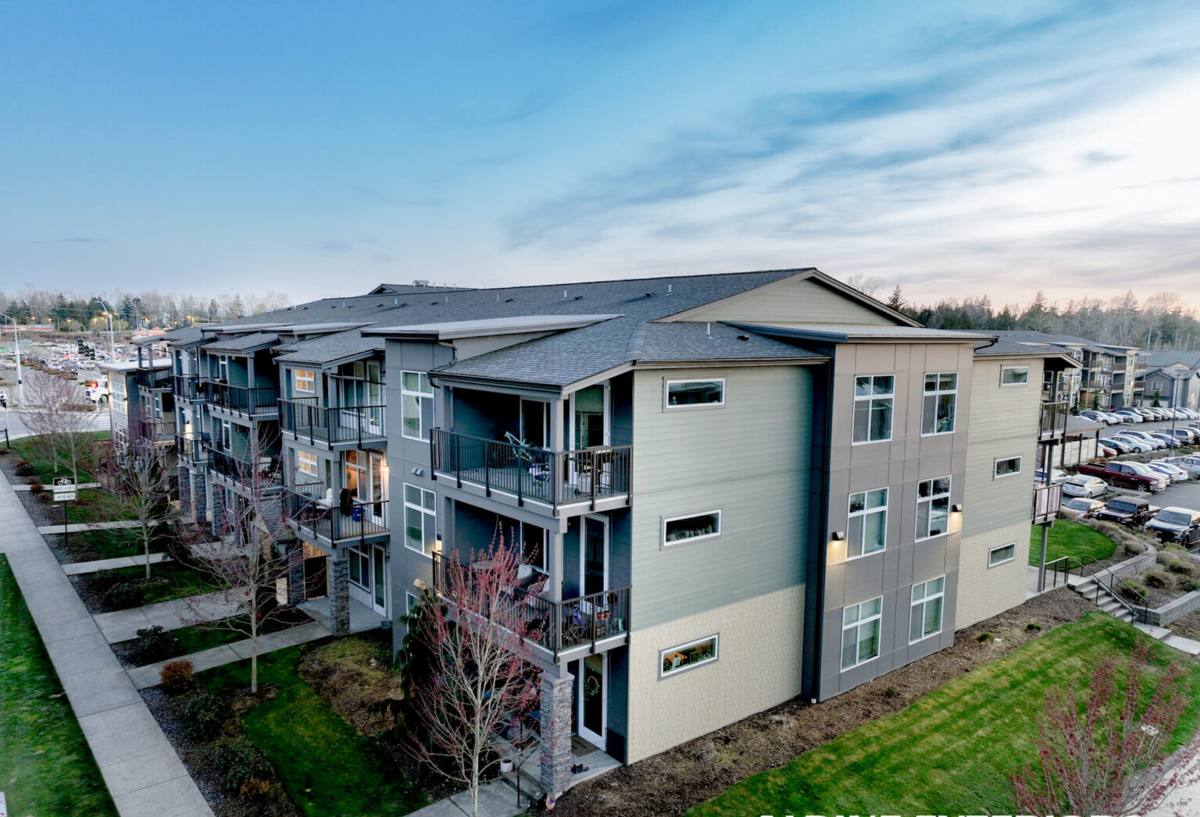
What a Correct Siding Installation Actually Involves
Siding is a system, not a single product. The board or panel you see is the last of several layers, and in a climate like Sudden Valley's, the layers underneath matter just as much as the finish on top.
Weather-Resistive Barrier and Flashing
Behind every board there needs to be a continuous weather-resistive barrier, properly lapped so water sheds outward instead of working its way behind the wall. Every window, door, and penetration needs correctly sequenced flashing — installed in the right order relative to the barrier — so wind-driven rain has nowhere to collect. This is the part of the job nobody sees once it's finished, and it's also the part that determines whether a house stays dry for the next 30 years or develops rot behind the siding in five.
Fastening and Clearances
Fiber cement siding has specific fastening requirements — nail type, spacing, and depth all affect how the material performs over time. Just as important are clearances: siding that's installed too close to grade, a roofline, a deck, or a downspout traps moisture against the bottom edge and starts failing from the inside out, long before the face of the board shows any wear. A crew that treats these details as optional is setting a house up for problems that won't show up until the warranty conversation gets awkward.
Signs Your South Hill Home Is Ready for New Siding
Not every issue means a full replacement, but these are the signs worth having a professional actually look at rather than waiting out:
- Paint that's peeling, bubbling, or needing repainting more often than every 8-10 years
- Soft, spongy, or crumbling spots when you press on the siding, especially near the bottom courses
- Persistent moss or dark streaking that comes right back within weeks of cleaning
- Visible gaps, warping, or boards that have pulled away from the wall
- Rising energy bills with no other explanation, which can point to a compromised weather barrier
- Siding that's original to a home built more than 20-25 years ago and has never been fully inspected
How Our Installation Process Works
The process is the same whether it's a full re-side or a section replacement — we don't skip steps to save time on either.
- On-site assessment — we look at the existing siding, sheathing condition, and any moisture damage before quoting anything
- Tear-off — old siding and trim come off down to the sheathing so we can actually inspect what's underneath, not guess at it
- Sheathing repair — any soft or water-damaged sheathing gets replaced before anything new goes up
- Weather barrier and flashing — installed and lapped correctly at every window, door, and penetration
- Siding installation — fastened to manufacturer spec, with the clearances the climate here actually requires
- Trim, caulking, and paint touch-up — finished to match the ColorPlus factory finish where field paint is needed
- Final walkthrough — we go over the finished job with the homeowner before calling it done
Why We Install Only James Hardie Fiber Cement
We get asked why we don't offer vinyl, LP SmartSide, or cedar, so we'll be straightforward about it. Vinyl is inexpensive and easy to install, but it's a petroleum-based product that expands and contracts with temperature swings, can crack in impacts, and doesn't hold up structurally the way a heavier material does over decades of coastal-influenced weather. LP SmartSide is a wood-strand product with a real fan base and a legitimate warranty, but it's still an engineered wood product at its core — edges and cut ends need diligent sealing, and in a climate with this much sustained moisture exposure, that ongoing maintenance discipline is a real burden to put on a homeowner. Cedar is genuinely beautiful, but it's a natural wood product that needs regular refinishing, is vulnerable to rot and insect damage, and in a moss-prone environment like this one, it demands more upkeep than most owners want to sign up for.
James Hardie fiber cement is what we standardized on because it's engineered for exactly this problem. It's non-combustible, it doesn't swell or rot the way wood-based products can, and it holds its factory-applied ColorPlus finish far longer than field-painted alternatives — which matters in an area where repainting siding means dealing with wet weather windows and moss regrowth on ladders. It's not the cheapest option on the shelf, and we're upfront about that. It's the one we're willing to put our name behind after the install truck leaves.
Choosing the Right Hardie System for This Climate
James Hardie makes climate-specific product lines called HZ (HardieZone) systems, engineered differently for humid, moisture-heavy regions versus drier ones. Homes in this part of Washington fall into the HZ5 zone, which is formulated and tested for exactly the freeze-thaw cycles, sustained dampness, and moss-friendly shade that South Hill properties deal with. Getting this designation right isn't a marketing detail — it affects how the product performs over the decades it's expected to last.
| Product Line | Best Use | What It Offers |
|---|---|---|
| HardiePlank Lap Siding | Most home exteriors | Traditional lap look, widest color and texture selection |
| HardiePanel Vertical Siding | Accent walls, gables, modern styling | Clean vertical lines, often paired with battens |
| HardieShingle Siding | Craftsman and cottage-style homes | Staggered or straight-edge shingle profiles |
| HardieTrim Boards | Corners, fascia, window and door trim | Matches siding durability at high-exposure edges |
What Siding Installation Costs Depend On
We won't quote a number here that doesn't mean anything without seeing the house, but these are the factors that actually move the price on a South Hill job:
| Factor | Why It Matters |
|---|---|
| Tear-off vs. new construction | Removing and disposing of old siding adds labor and disposal cost |
| Sheathing or structural repair | Water damage found during tear-off has to be fixed before new siding goes on |
| Home size and wall complexity | More corners, gables, and dormers mean more cutting and trim work |
| Siding profile and finish | Shingle-style and premium ColorPlus finishes cost more than standard lap |
| Access and site conditions | Slopes, tight setbacks, or limited equipment access add labor time |
Why Hire a Crew That Already Works in South Hill
Fiber cement siding is not forgiving of a rushed or inexperienced installation — cut it wrong, fasten it wrong, or skip a flashing detail, and the mistake doesn't show up until years later, usually as a moisture problem hidden behind the wall. A crew that already works in this specific area has already dealt with the wall assemblies common to homes here, already knows how the local moss and moisture patterns behave against a north or west-facing elevation, and already understands Whatcom County's permitting expectations for exterior work. That familiarity shows up in fewer surprises during tear-off and a finished job that's built for the conditions it actually has to survive, not generic conditions from a manufacturer's install manual.
Caring for Your Siding After Installation
Correctly installed James Hardie siding is low-maintenance, not no-maintenance. A yearly rinse-down to keep moss and organic buildup from taking hold, a walk-around after major storms to check caulking and trim, and keeping gutters clear so water isn't sheeting down the wall face will keep a properly installed job looking and performing the way it should for the long haul. None of that is heavy lifting — it's a fraction of the upkeep that wood or vinyl siding demands in this climate.
If your South Hill home's siding is showing its age, or you just want a straight answer about what shape it's really in, we're happy to take a look. Reach out for a free, no-pressure estimate using the form below.